With the rapid growth of the solar market, many leading companies are innovating and shaping the future of solar technology. In this article, we explore the top 10 solar inverter manufacturers to watch in 2025, each contributing to the global shift toward smarter, more efficient energy systems.
What Is a Solar Inverter
A solar inverter is a key component in any solar power system, converting DC electricity from solar panels into AC power used by most appliances and electrical equipment. This transformation is essential, as over 90% of devices worldwide operate on AC. Modern inverters go beyond basic conversion, offering features like real-time monitoring, fault detection, battery integration, and grid synchronization.
High-efficiency models can improve energy output by 2–6%, while hybrid inverters with storage capabilities can cut electricity costs by up to 60% through time-of-use optimization. Remote monitoring allows users to track performance and environmental benefits, making inverters essential for optimizing both savings and system reliability.
As demand for solar energy grows, leading brands like Huawei, Sungrow, SolarEdge, and Enphase are shaping the future of solar technology. These companies provide advanced solutions that cater to a variety of needs, from residential to large-scale industrial applications. Let’s explore the top 10 solar inverter brands to watch in 2025, each contributing to the global shift towards smarter, more efficient energy systems.
Types of Solar Inverters
Choosing the right solar inverter depends on factors like system size, site layout, shading, and whether energy storage is involved. Here are the four main types, each tailored to specific needs:
String Inverters
The most widely used option for residential and small commercial systems. Multiple panels are connected in series to a single inverter. While cost-effective and easy to maintain, performance can drop if one panel underperforms due to shading or faults.
Best suited for:
Locations with uniform sun exposure
Homeowners or businesses looking for a simple, low-cost setup
Central Inverters
Scaled-up versions of string inverters, these are used in large commercial or utility-scale systems. They manage power from hundreds of panels, typically housed in one centralized cabinet. Central inverters offer high efficiency and reduced per-watt cost at scale.
Best suited for:
Solar farms and large rooftop or ground-mount installations
Industrial users needing high-capacity performance
Microinverters
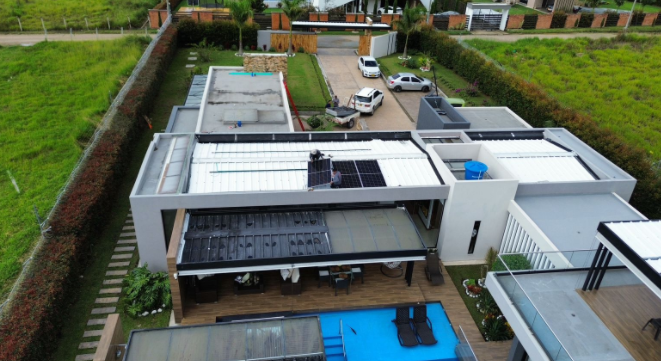
Installed on individual panels, microinverters perform DC-to-AC conversion right at the source. This allows each panel to operate independently, maximizing output in shaded or uneven roof layouts and enabling panel-level monitoring.
Best suited for:
Residential rooftops with shading or multi-angle layouts
Systems where monitoring or future panel expansion is important
Hybrid Inverters
Also known as multi-mode inverters, these integrate solar production, battery storage, and sometimes even generator input. They manage energy flow intelligently, enabling backup power, self-consumption, and time-of-use optimization.
Best suited for:
Homes or businesses using solar plus batteries
Off-grid or grid-tied systems requiring backup or peak-shaving
Users seeking greater energy autonomy and savings
মন্তব্যসমূহ
একটি মন্তব্য পোস্ট করুন